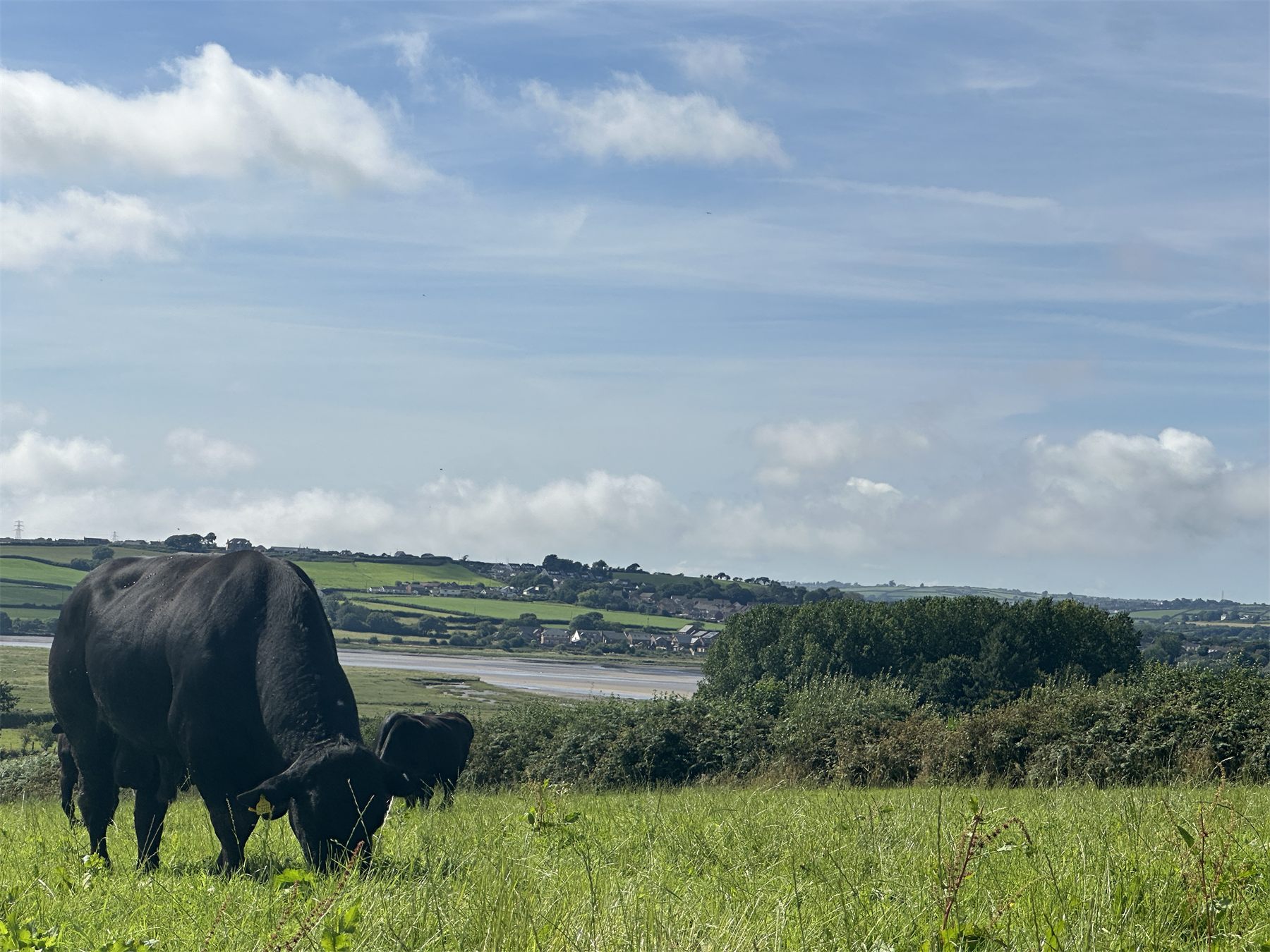
A black cow grazing on a hillside field above the water
Our cattle

Aberdeen Angus & Black Limousin

The herd

The heart of the farm

Today we have a mixed herd of Aberdeen Angus and Black Limousin cattle.

They graze the fields around the farm, and looking after them is our year-round job, long after the last sweetcorn has been picked. During the summer we run farm tours, so you can come and meet them.

We farm regeneratively, and the cattle are a big part of that, grazing the grass and feeding the soil that our crops grow in.

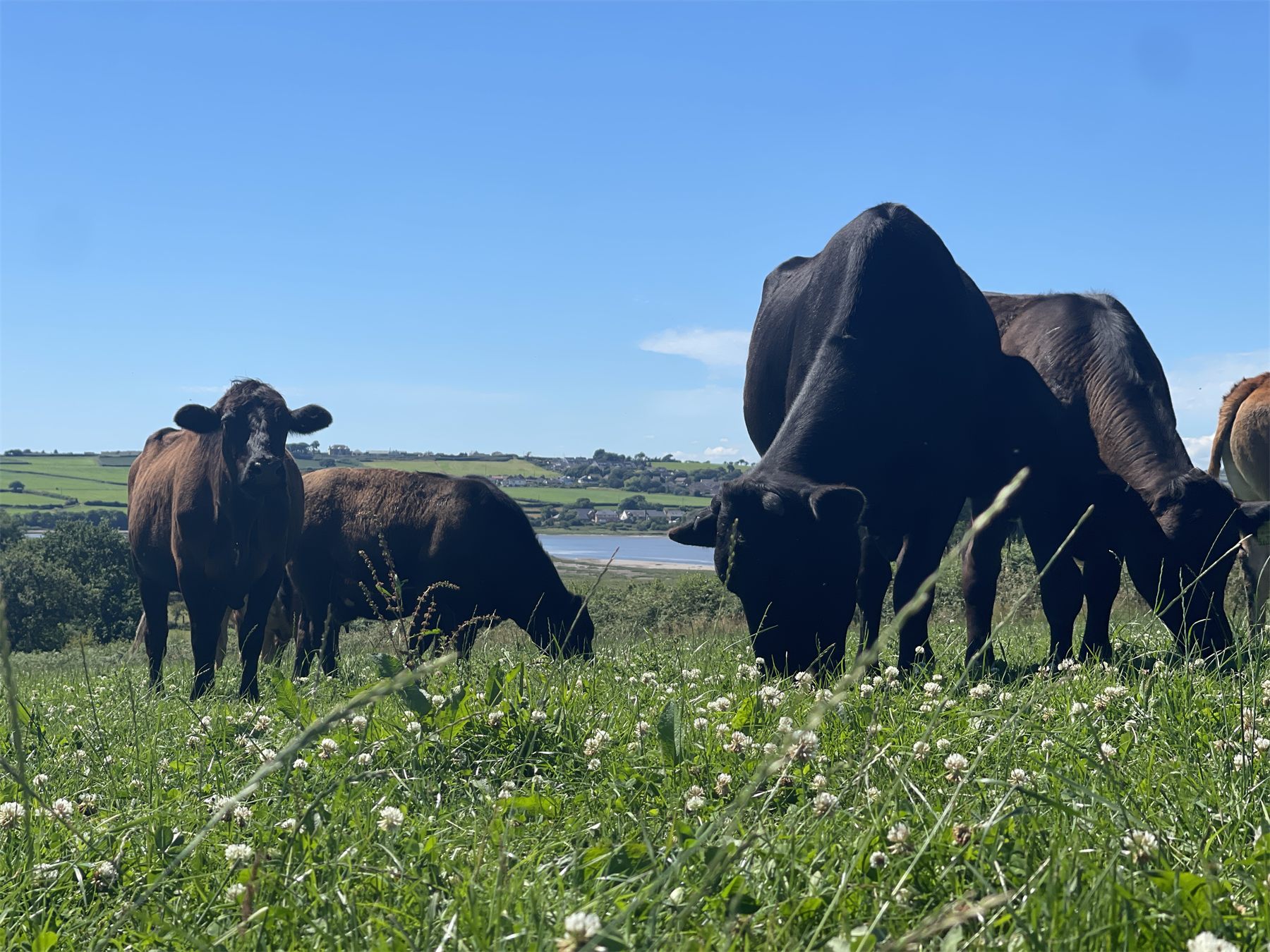
Our cattle grazing a clover field on a sunny day, with the water and hills behind
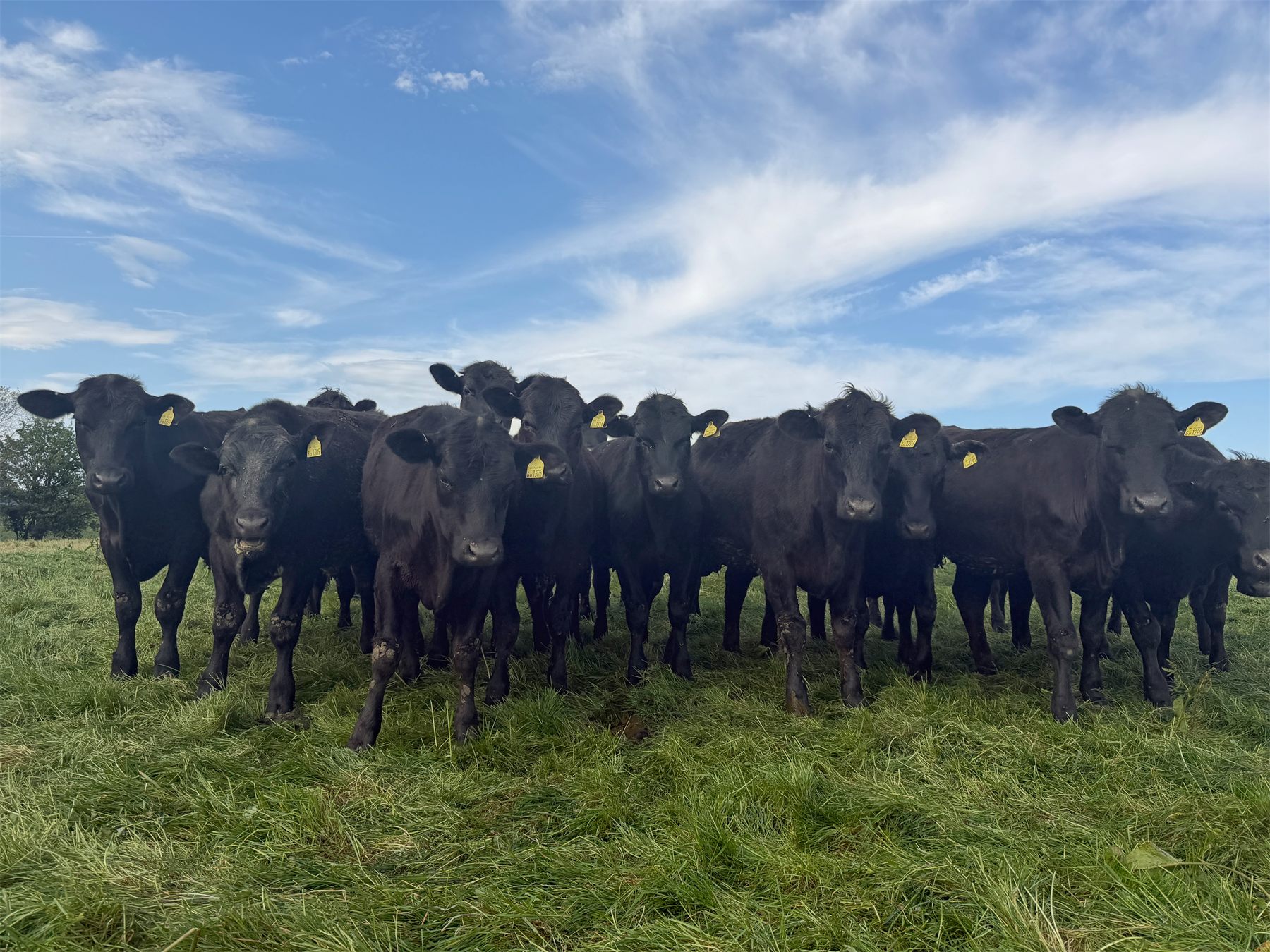
A line of black Aberdeen Angus cattle standing in long grass and looking straight at the camera, under a big blue sky

Aberdeen Angus

A native breed from the north-east of Scotland. Angus cattle are naturally hornless, hardy and calm, do well outdoors on grass, and are known for well-marbled, full-flavoured beef.
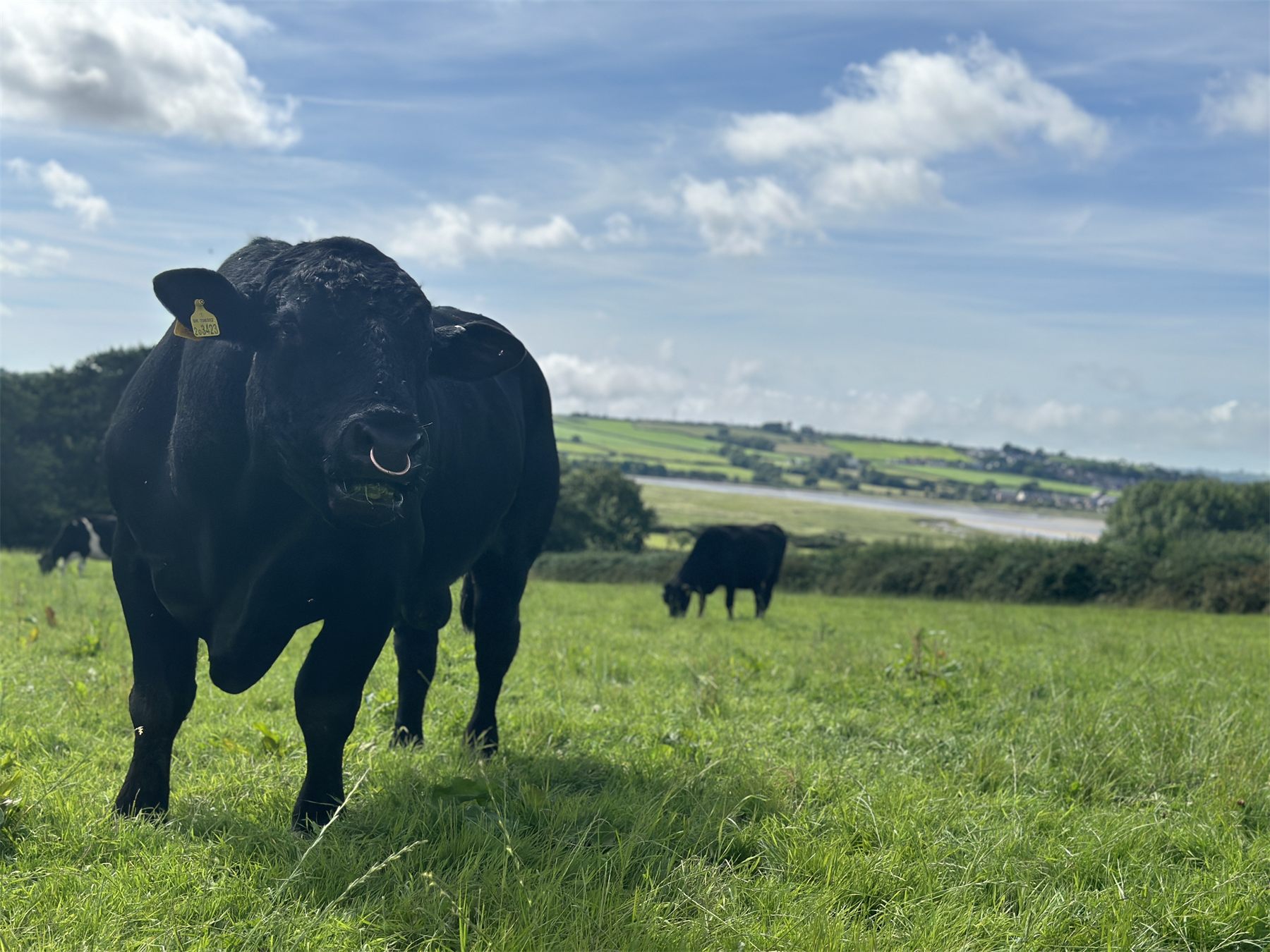
A big, muscular black bull standing in the field

Black Limousin

Limousin cattle come from the Limousin region of central France, where they're traditionally golden-red. Black Limousins are the black-coated line of the breed: muscular, strong, and known for lean beef.
Out in the fields

Grazing at Llannant

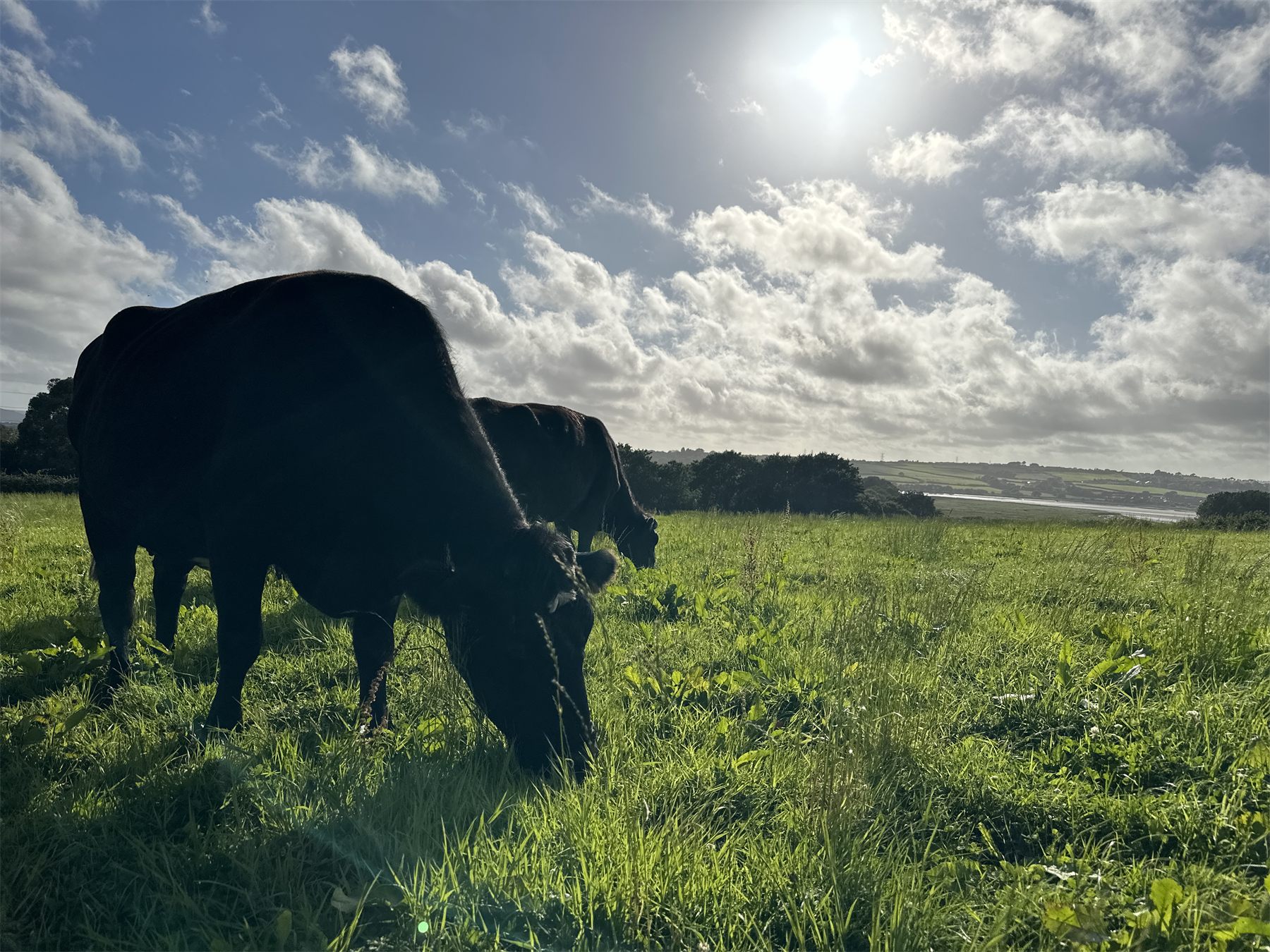
Black cattle grazing in the evening sun, with water in the distance
Evening sun on the top field
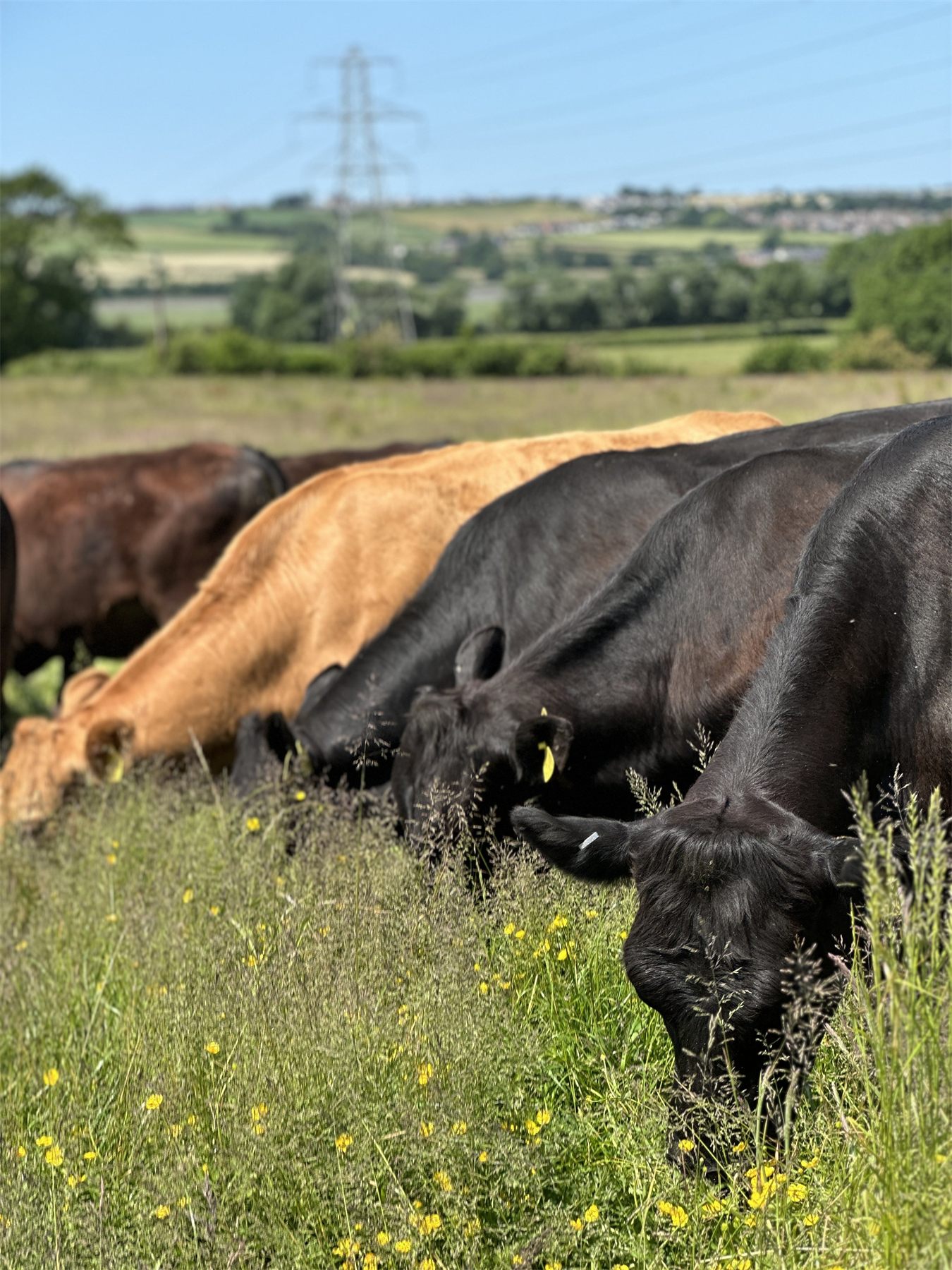
A line of black and brown cattle with their heads down, grazing long summer grass
Heads down in the long grass
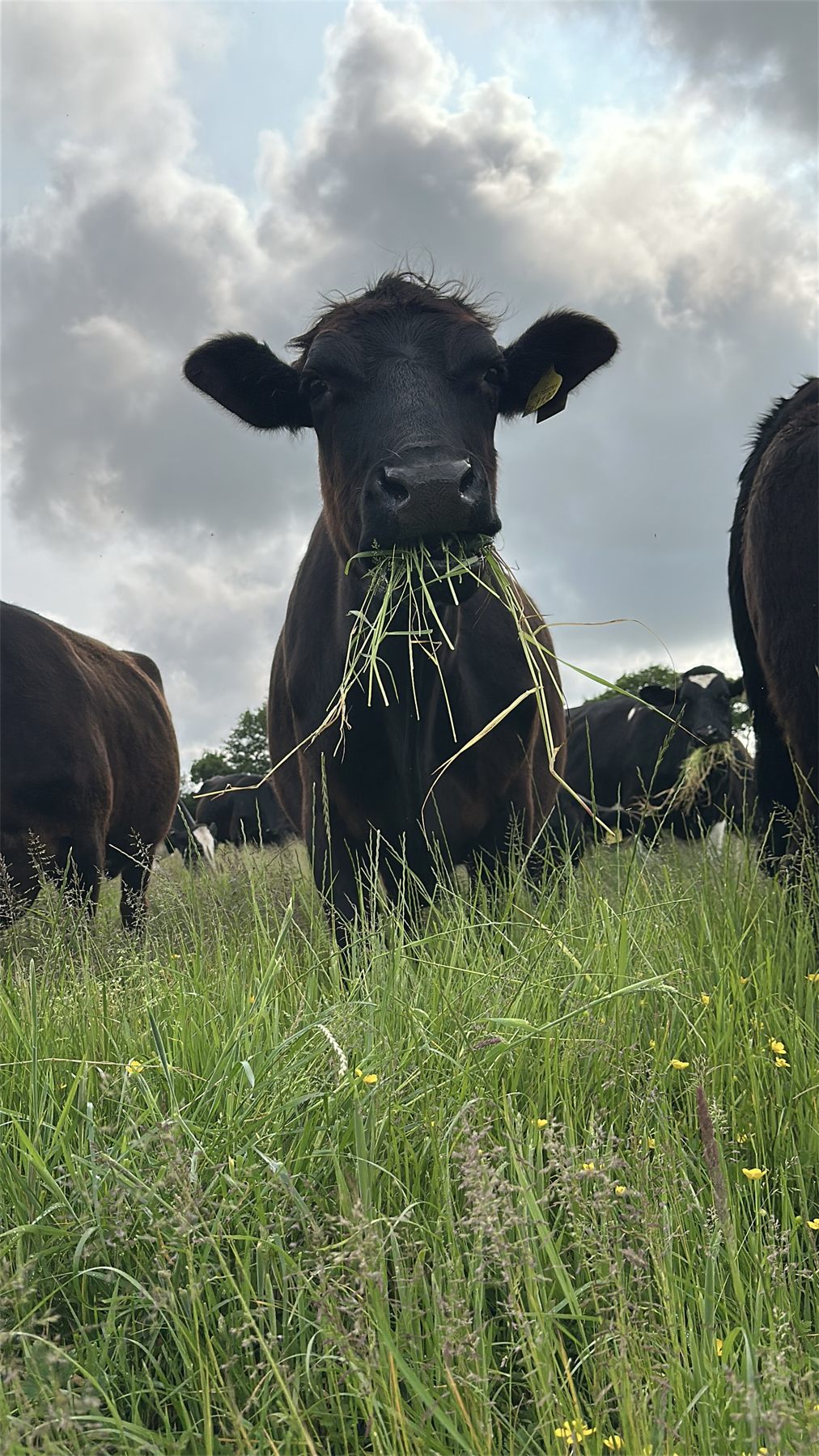
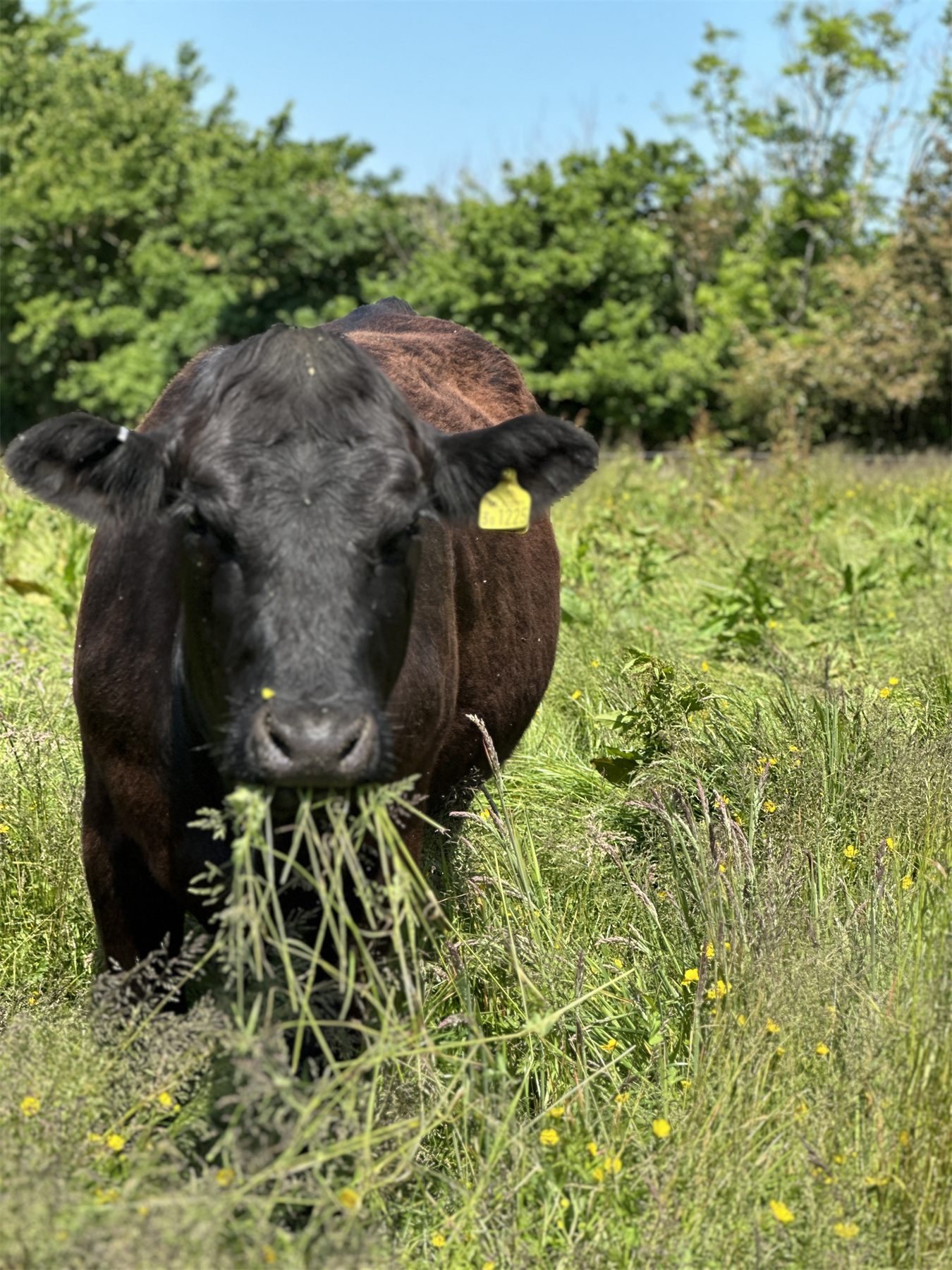
A black cow with a mouthful of grass, looking at the camera
A mouthful of grass
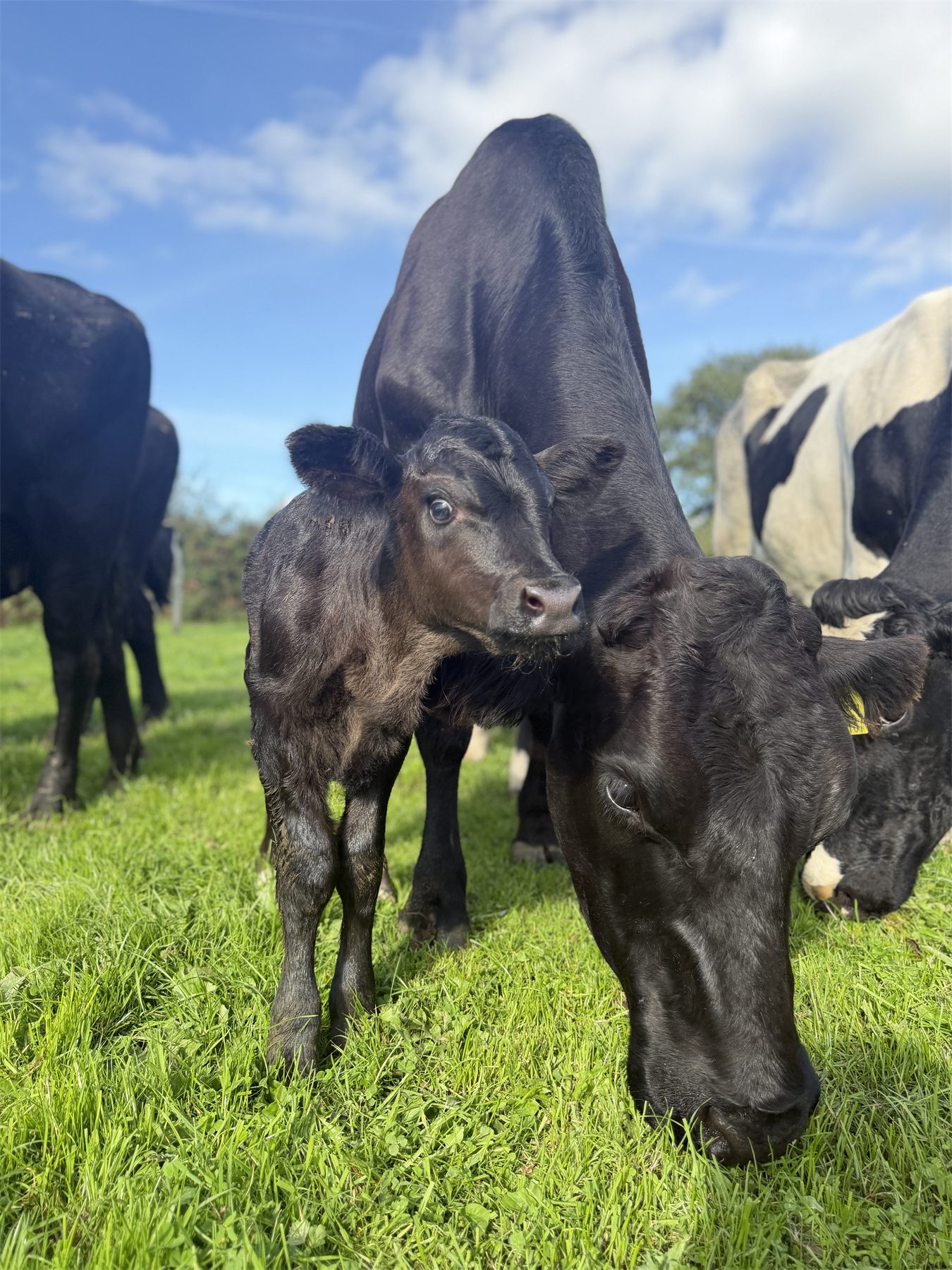
A black cow with her young calf beside her in the field
Cow and calf
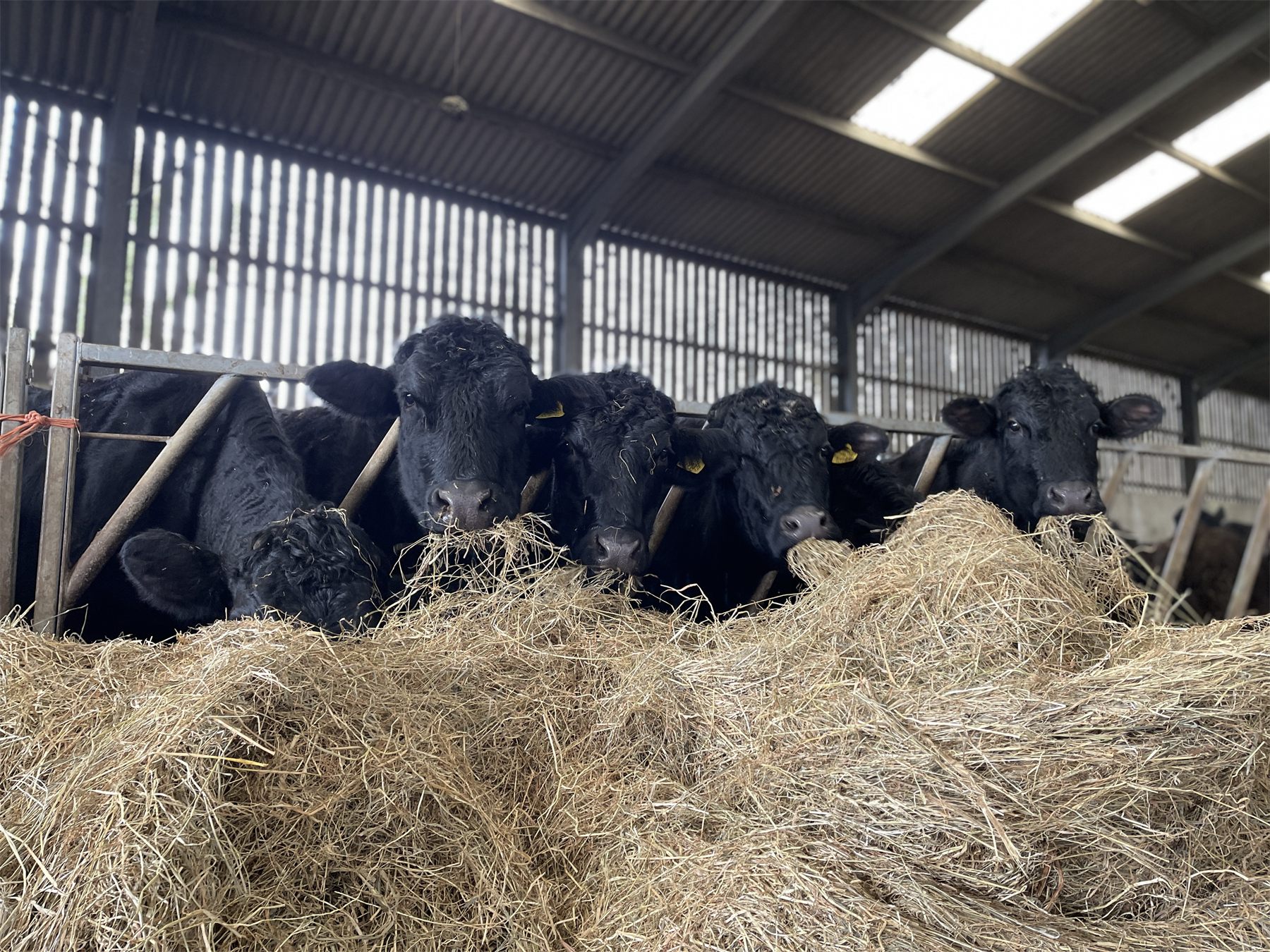
A row of black cattle in the shed, eating from a pile of hay
Winter: feeding in the shed
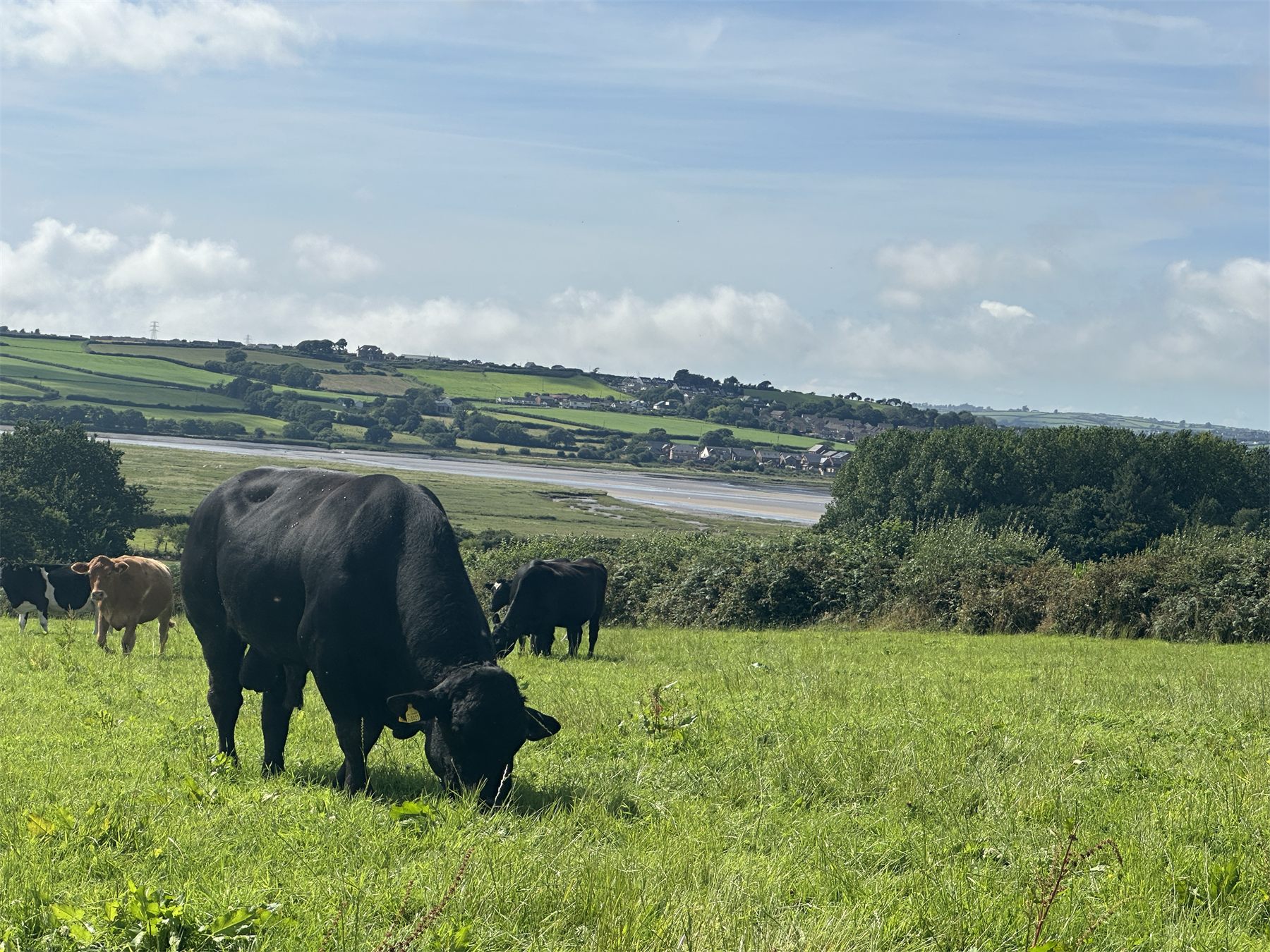
A black cow grazing on a hillside, with the water and fields far below
Room with a view
A black cow standing in long grass by the hedge, looking straight at the camera
Curious
Through the year

Silage, hay & haylage

Summer isn't just sweetcorn. We make our own silage, hay and haylage to feed the herd through the winter.

When the weather's right we cut the grass, turn it and bale it. How long it dries in the field decides what it becomes:

  • Silage: wilted briefly, baled while the grass is still moist, then wrapped so it keeps.
  • Haylage: left to dry a bit longer, then baled and wrapped.
  • Hay: dried right out in the sun, and baled dry.

It all means good feed for the cattle through the winter, grown on our own fields.
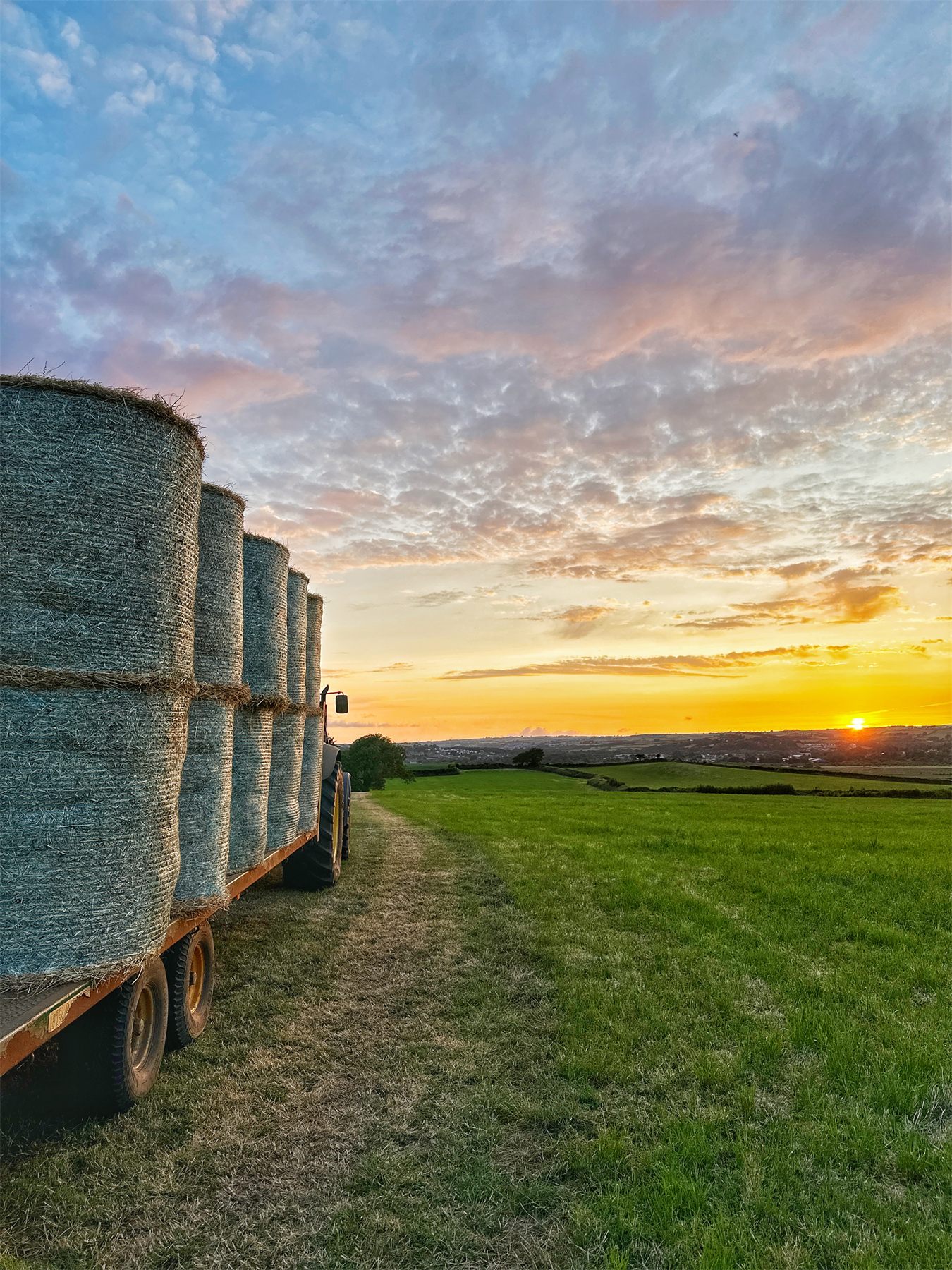
A trailer stacked high with round bales at the edge of a field, under a golden sunset
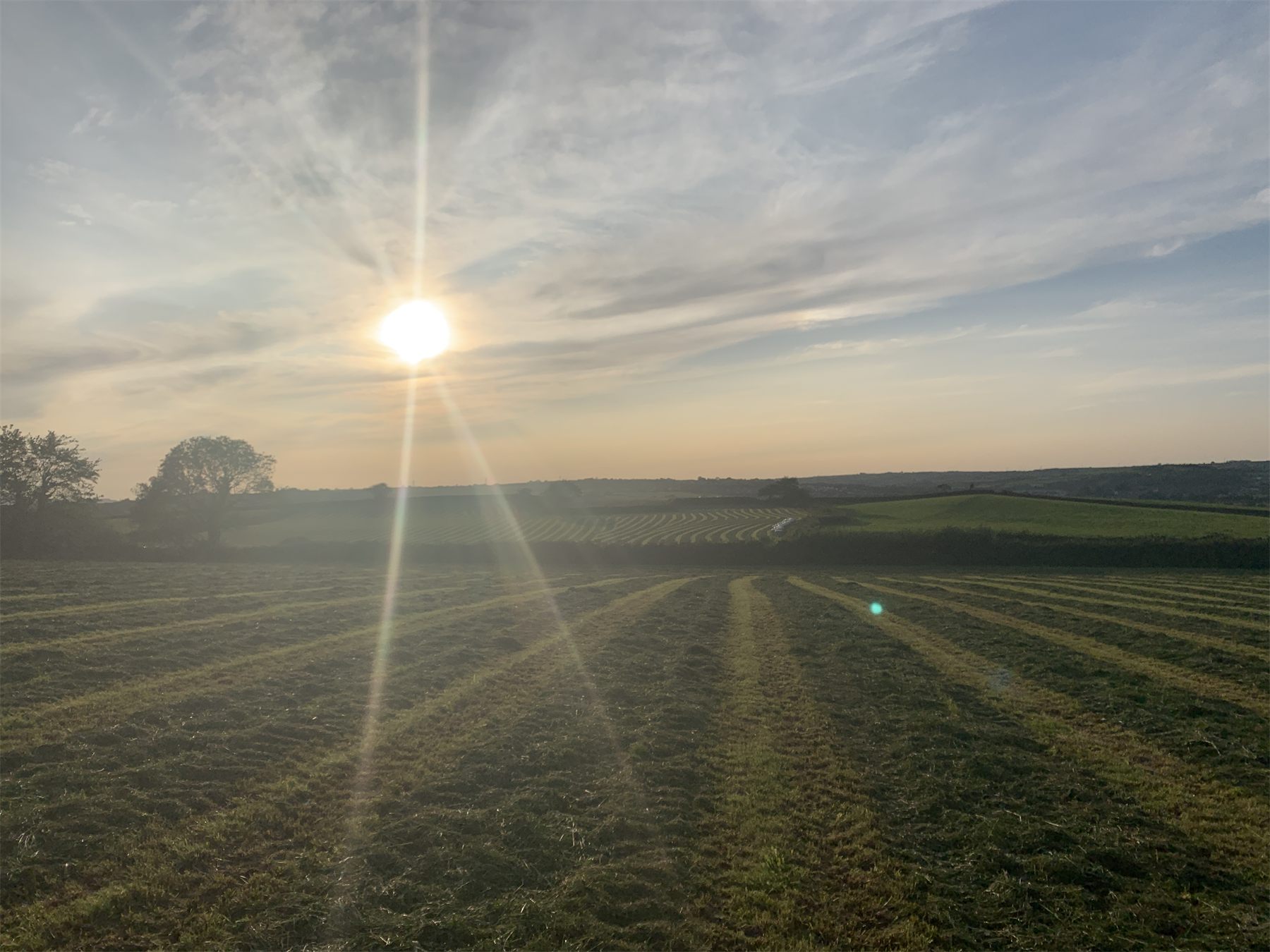
Rows of cut grass stretching across the field towards the setting sun
Cut and in rows
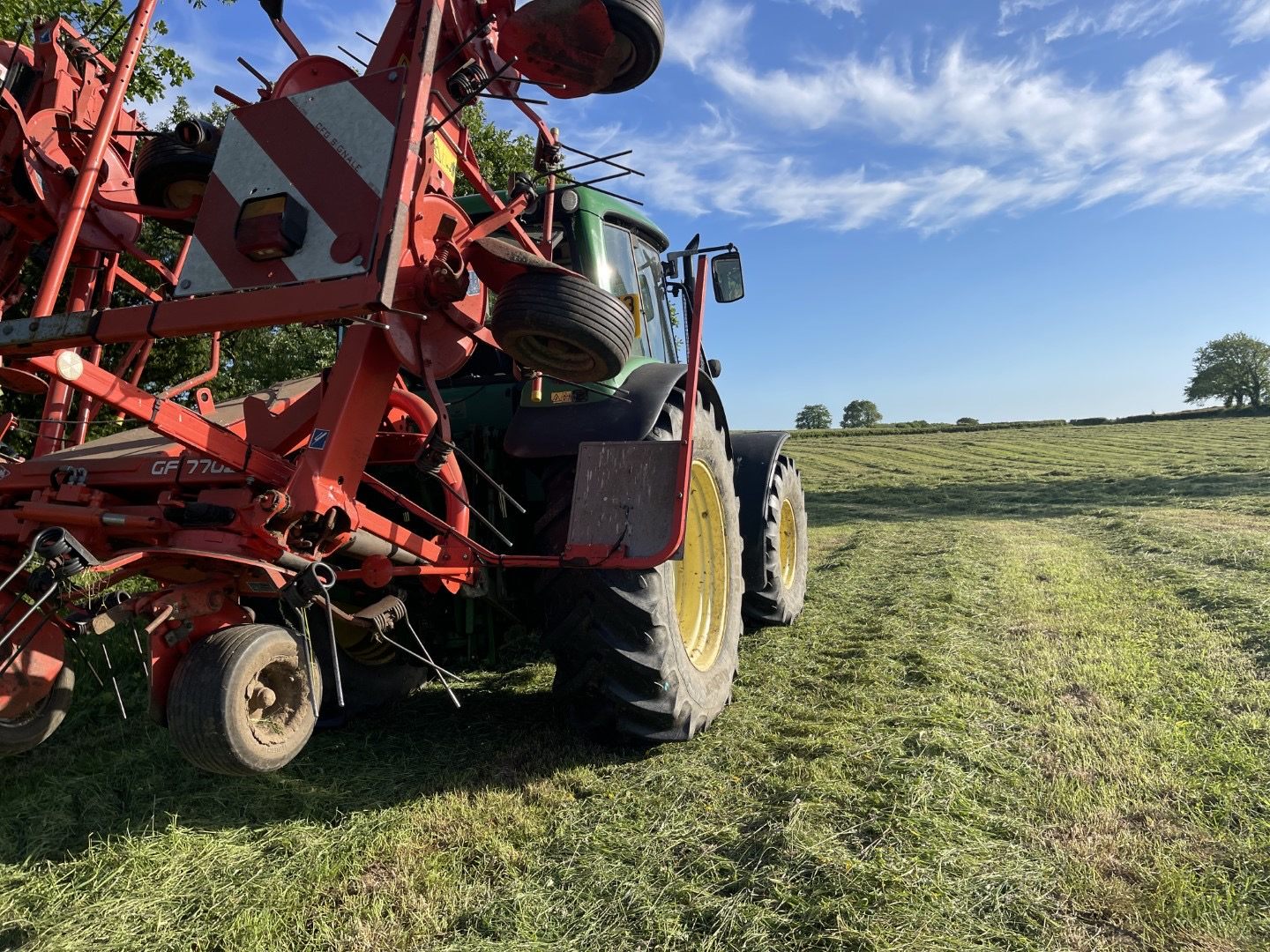
A tractor with a red machine for turning the cut grass, in a mown field
Turning the grass
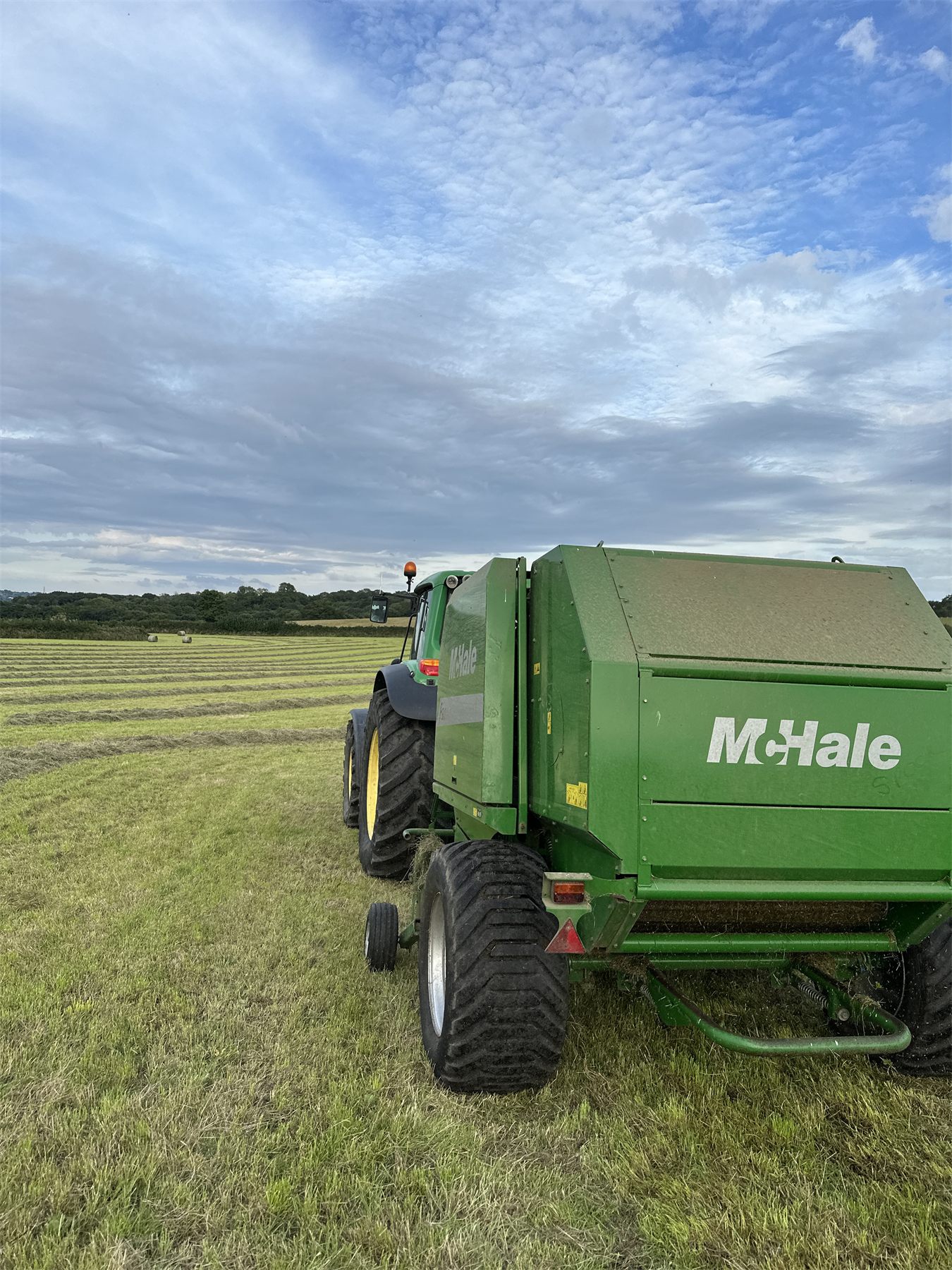
A green McHale baler hitched to a tractor in a mown field
The baler
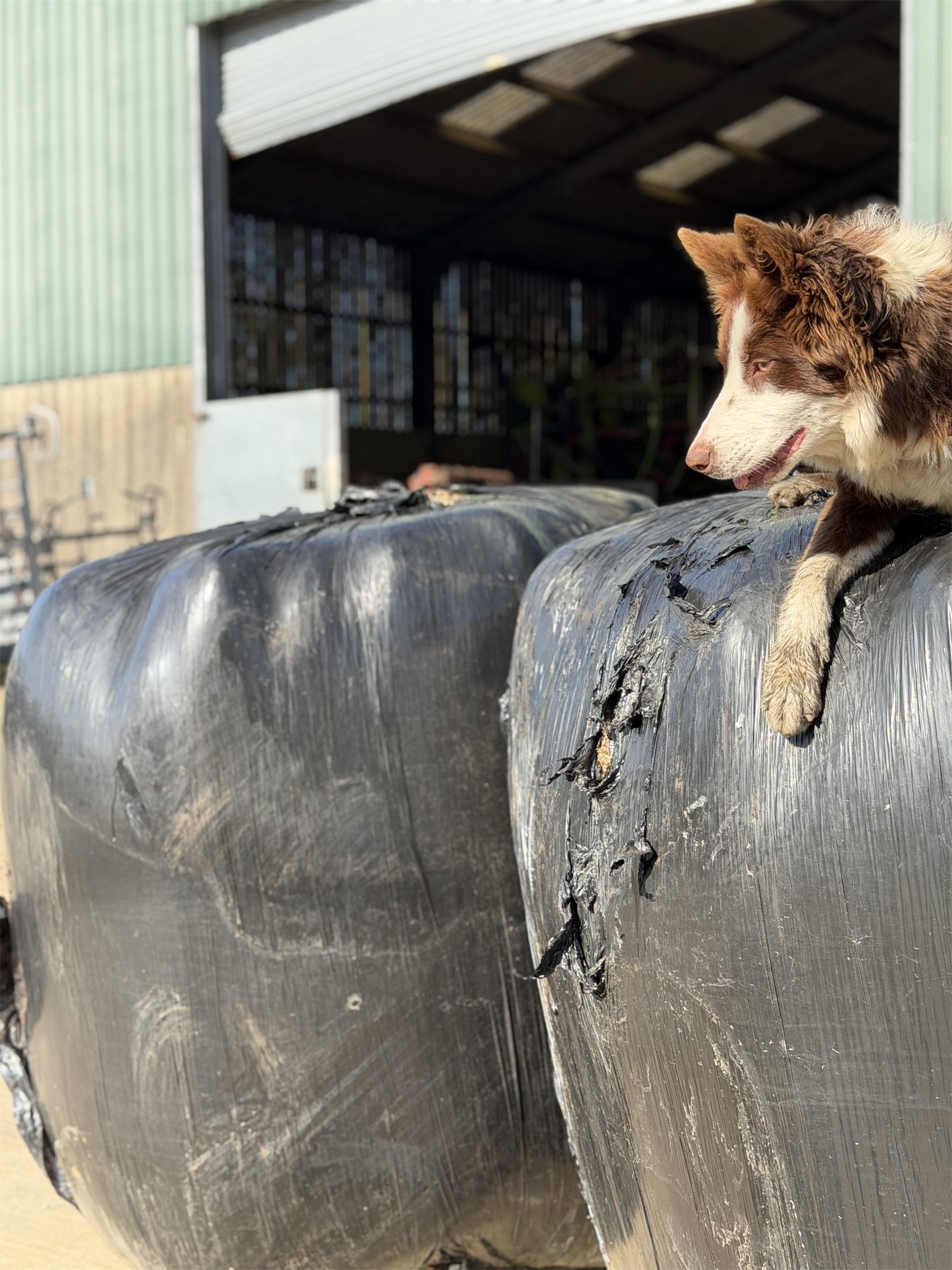
A dog resting its head on top of black wrapped bales by the shed
Wrapped, with a helper
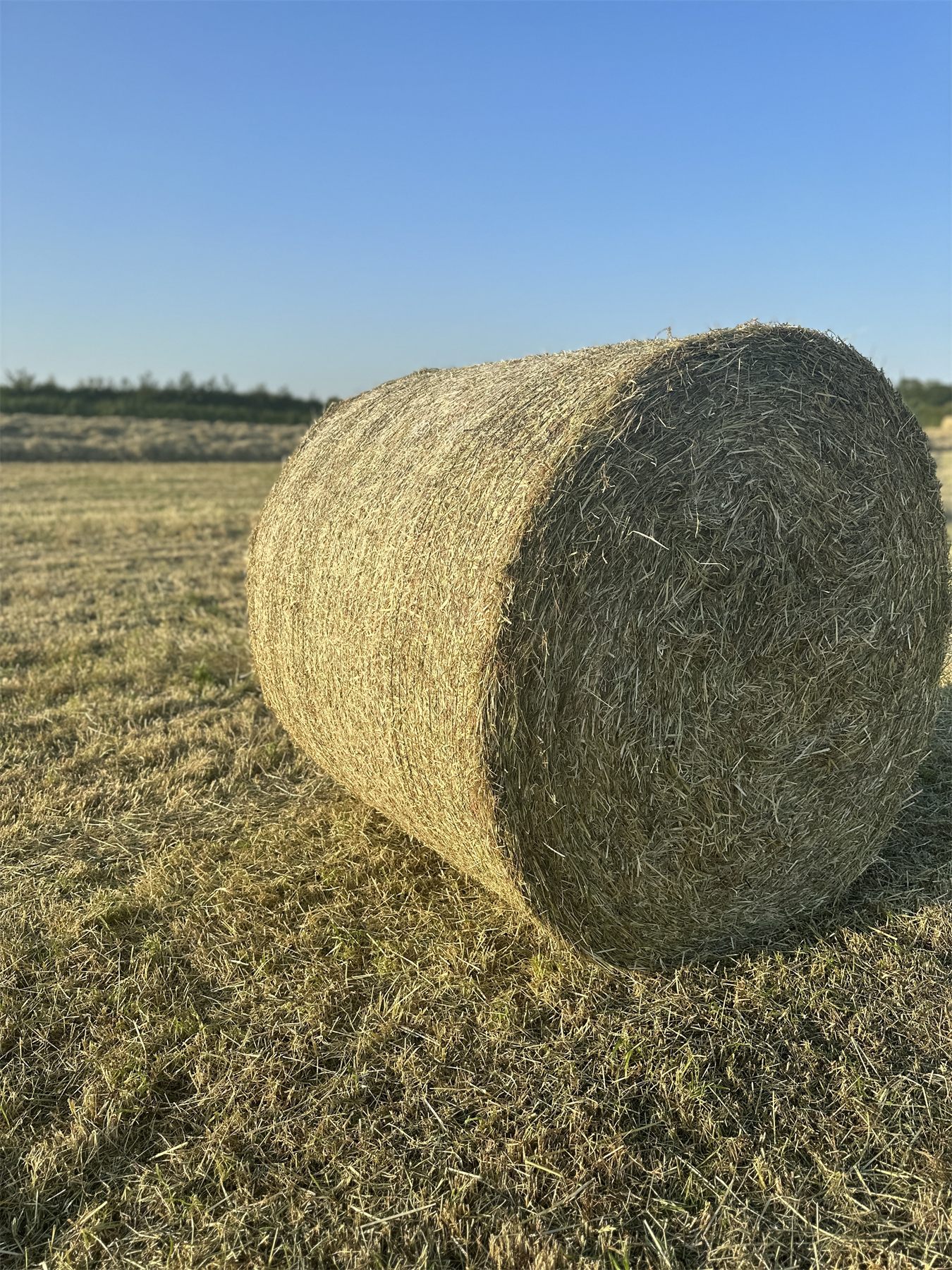
A single round bale of hay in a cut field under a clear sky
A bale of hay
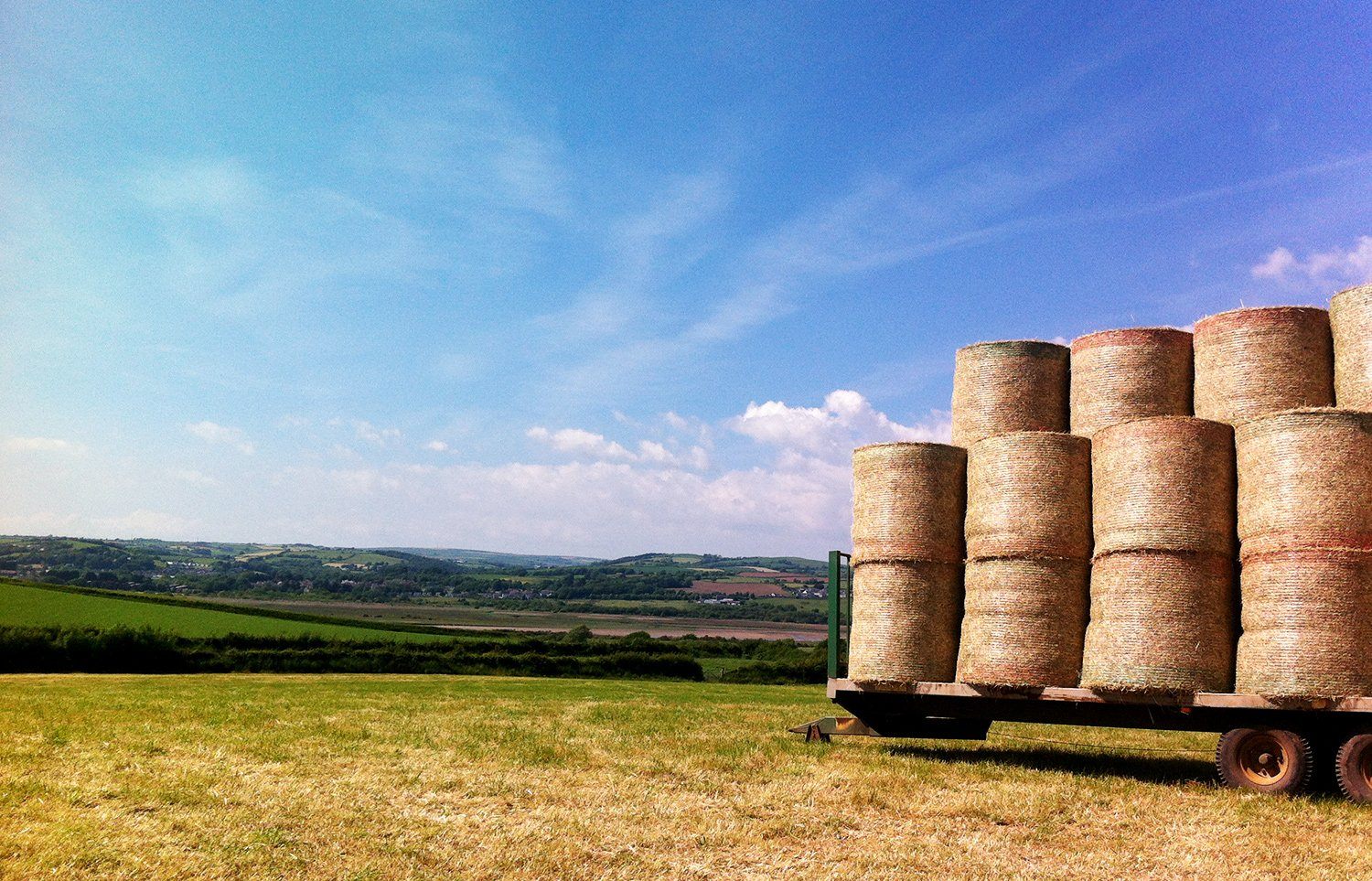
Round bales stacked high on a trailer in a cut hay field
Bringing the hay in
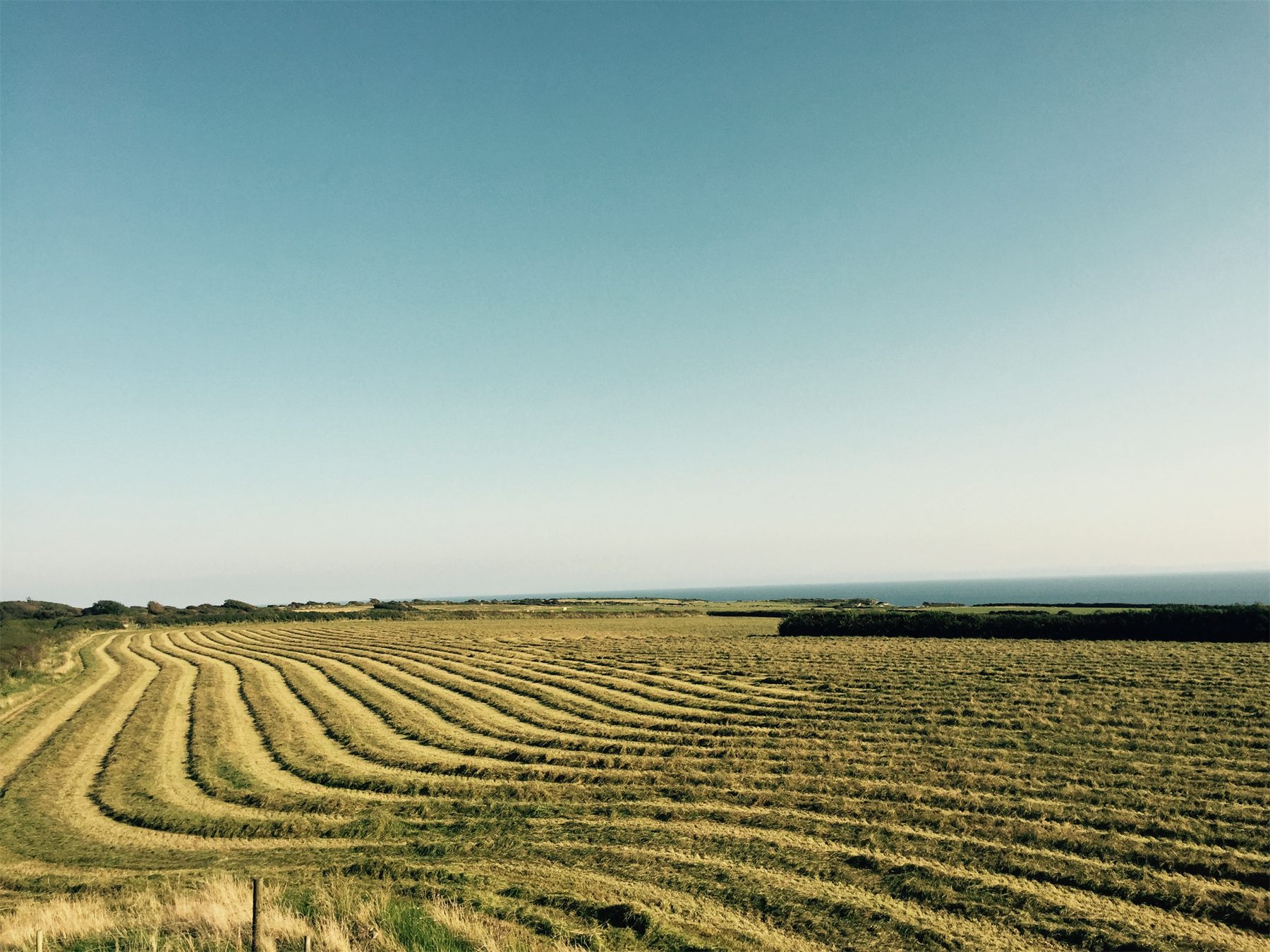
Long rows of cut grass curving across a field towards the sea
Rows drying in the sun
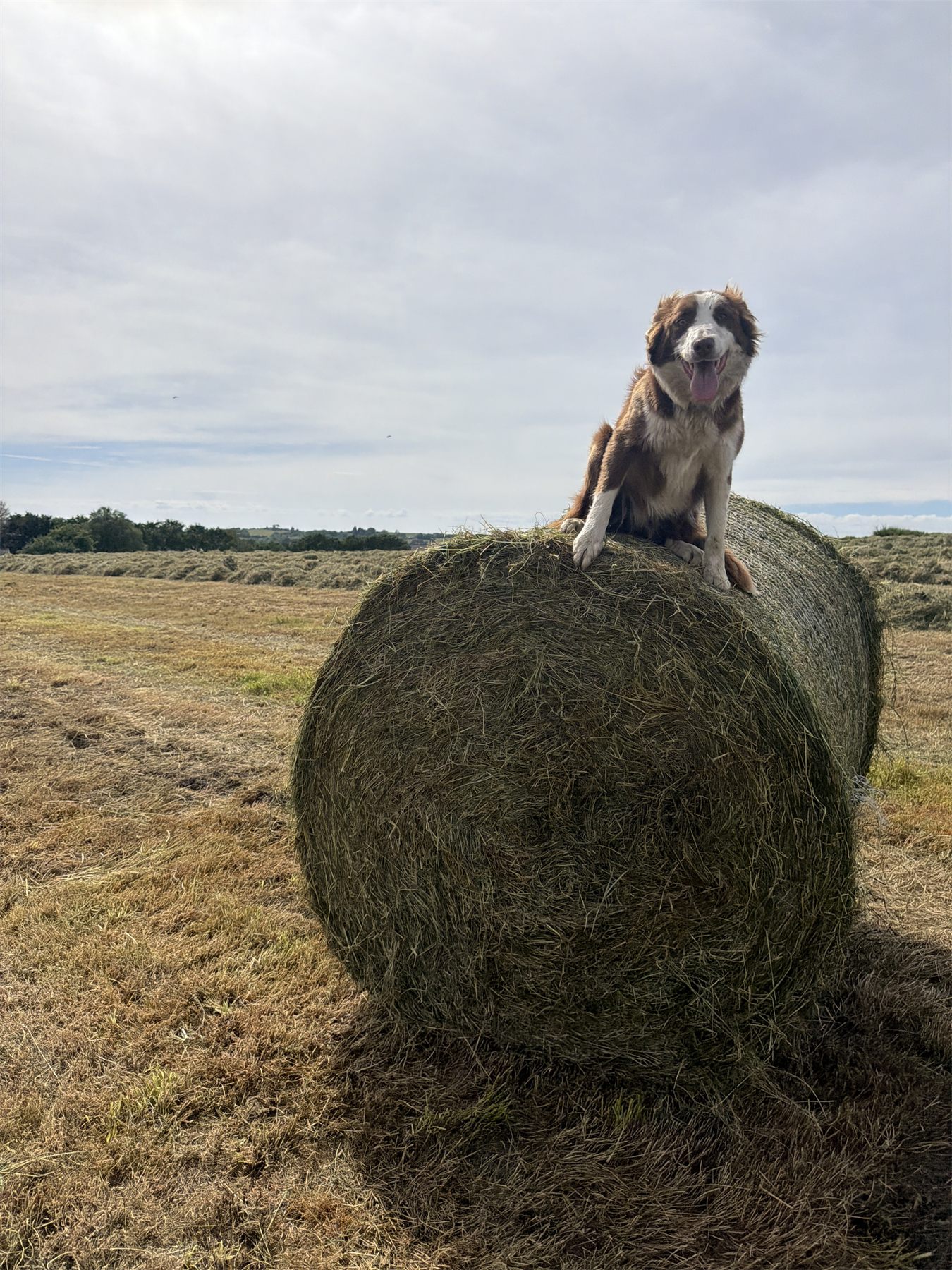
A dog sitting on top of a round bale in a cut field
King of the bale
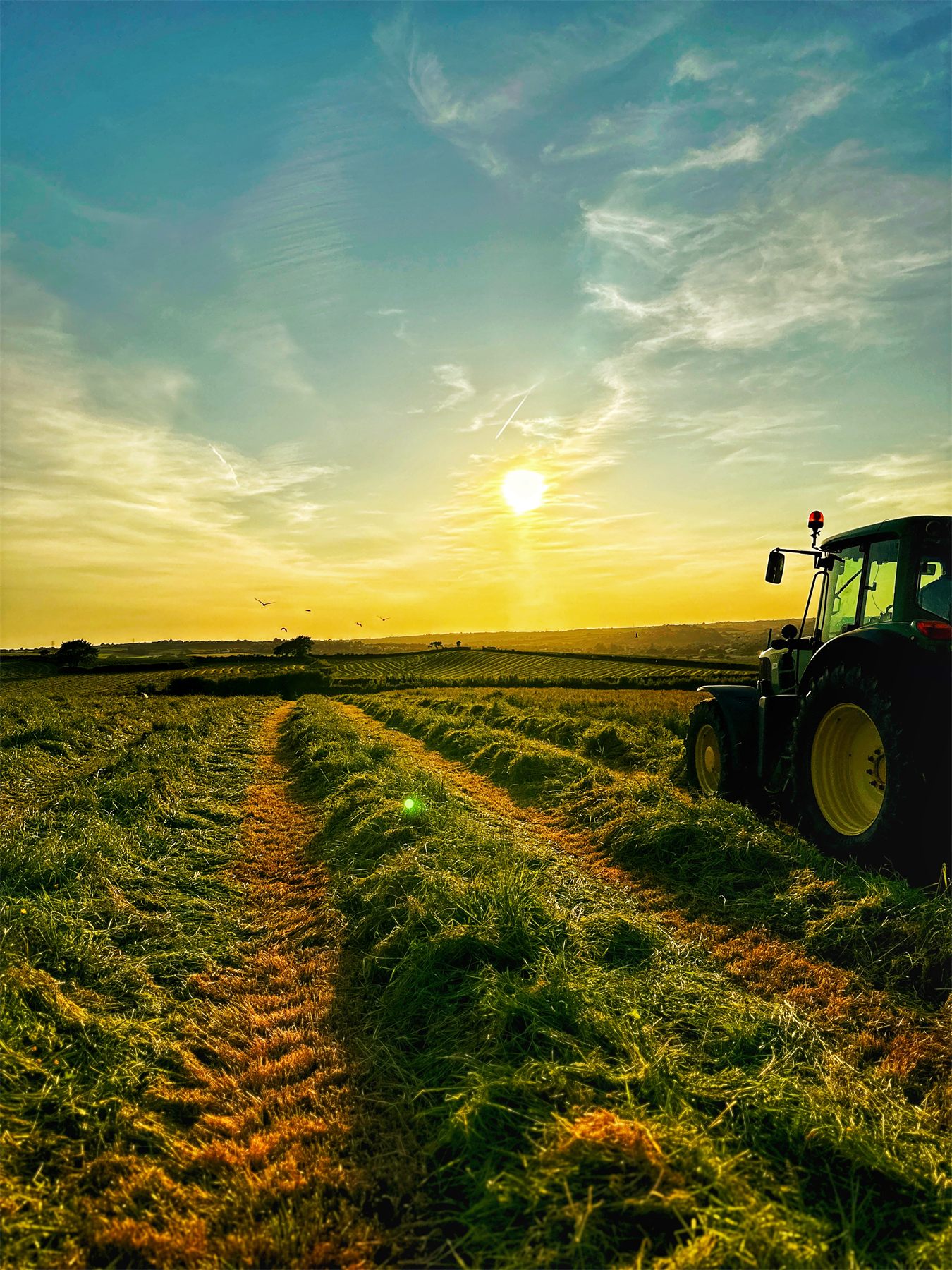
Sunset over rows of cut grass, with a tractor at the edge of the field
Working late